Friday, February 2, 2024

Electric power innovations. Fuel cells in aircraft and solar panels over Arizona canal.


"ZEROe teams powered on the iron pod, the future hydrogen-propulsion system designed for Airbus’ electric concept aircraft." (Intersting Engineering, Airbus's ZEROe: First engine fuel cell powers up for hydrogen flight)


Electric power innovations. Fuel cells in aircraft and solar panels over Arizona canal. 


Airbus Zero is a testbed for fuel cells that are used in commercial aircraft. The problem with aircraft is always noise and pollution. If the aircraft uses electric engines. That decreases noise levels and cleans the air, especially around airfields. Lightweight solar panels that can be installed on the wings and body of aircraft can give electricity to electric engines. And they can extend an aircraft's operational range. 

 The thing that makes this kind of system interesting is that the "flying cars" or cheap VTOL aircraft can use them as a power source. The hydrogen power cells can give energy to electric aircraft at night time. And that makes them more flexible than if systems use only solar panels. 

If we think of the aircraft of the future the aircraft can operate over the city areas using electric engines. When they are at longer distances those aircraft can turn to use jet engines. Solar panels make it possible. That hydrogen-powered aircraft can create fuel in its body. 

Hydrogen can also be used as fuel in turbines, ramjets, and scramjets. The hydrogen-powered aircraft can travel at supersonic- or hypersonic speed. Solar power makes it possible for those aircraft to use ecological fuel. The solar cells would use electrolytic chambers that split water molecules into hydrogen and oxygen. 

The water injection into the combustion chamber can increase the oxygen-hydrogen fuel's thrust. Normally, rockets use hydrocarbon as fuel because that fuel gives more pressure against the front side of the combustion chamber. The weakness of the hydrogen-oxygen fuel mixture is the weak thrust. 

The thing that limits the use of hydrogen and oxygen in rocket engines is high specific impulse. That means exhaust gas speed is so high, that there is no push to the forward. There is low pressure against the front side of the combustion chamber. And that decreases the hydrogen-oxygen mixture's thrust. However, water injection into the combustion chamber will increase the thrust. 


"Project Nexus could save water while generating solar energy". (Interesting Engineering, Arizona's solar-over-canal project tackles drought — here's what we know)


The solar panels can used to cover aqueducts. 


There is a plan to cover the Arizona Canal in the USA using solar panels. Those panels can protect water. And they can deliver energy to the electric network. The power of those solar panels could be 13 terawatts. And it can deliver energy to Los Angeles in ten months. Another use of those solar panels would be the cooling system that denies water vaporizations. And those solar panels also increase the security of those water supply systems. 

Blinders or turning modules allow systems to adjust solar cell's energy production. In the last case, the silicone layer that produces electricity is installed on the square-shaped rod. That rod can made of wood. Solar panels cover one of its sides. When the system produces too much energy, part of those rods turn the solar panel off the sun's direction. That helps to adjust energy production. 

In the wildest visions, that kind of solar panel system can deliver energy to the particle accelerator or modular supercomputers. The computer or accelerator system will installed in those solar panel elements. If there are blinders, commonly used in windows or modular solar panels can turn their electric-producing silicone layer away from the sun which denies the overload. When the system requires more energy, it turns more electric production components to the sun. Turning elements allow for adjustment of the solar cells' power. 

The main problem with aqueducts or water channels that deliver water to cities, especially in sunny and warm areas is vaporization. Every time, when sunlight vaporizes water, that thing means that water will go somewhere else than it should. Cities like Los Angeles require lots of water, and the problem is clean water. 

In some visions, solar panels can used to cover the water supply system. Especially open water supply canals are places where water vaporizes. And another thing is that they are vulnerable to sabotage. 


https://interestingengineering.com/innovation/airbuss-zeroe-first-engine-fuel-cell-powers-up-for-hydrogen-flight

https://interestingengineering.com/science/arizonas-solar-over-canal-tackles-drought


https://learningmachines9.wordpress.com/2024/02/03/electric-power-innovations-fuel-cells-in-aircraft-and-solar-panels-over-arizona-canal/

Tuesday, January 23, 2024

What would you do with the most slippery material in the world?

   What would you do with the most slippery material in the world? 


"Researchers have made groundbreaking discoveries in superlubricity, demonstrating how this state of minimal friction could revolutionize energy efficiency in mechanical systems. Their work reveals that friction in superlubricity defies traditional laws, offering promising applications for reducing global energy consumption. Credit: SciTechDaily.com" (ScitechDaily, Slippery Science: Unlocking the Secrets of Superlubricity for Energy Efficiency)


While people talk about slippery materials they don't think about what makes material slippery. The thing that makes materials slippery is one thing that determines the use of materials. People can use Slippery materials, like slippery polymers for transporting heavy things, like furniture at least for short distances. 

In those cases, the ideal material can be a polymer shell that is slippery when it's against another polymer. That thing decreases friction. In those cases, the polymer has a slight layer. And that thing makes that polymer friction very low. 

In some versions, there are small "hair" or strings on the polymer layer. When a person moves things another way, those strings will pull into the holes that are on that layer. But when the merchandise moves to another side, that pulls those strings up. That increases the friction and prevents the object slide backward. 

In some models, those nano-wires can pulled in when electricity is conducted in that material. That thing makes it slippery when the user wants it. That ability makes those systems keep strong in touch with gloves. And when the electricity is conducted to that material, it removes dirt from the layer. 

In some cases. There is a liquid polymer that the user can pour into the layer. There are small nano-balls that are on slight polymer. Those nanoballs can make the layer extremely slippery. 


Northrop X-21

But there is another way to make the shell slippery. In some versions, small grooves on the shell decrease friction. Those grooves' diameter is so small, that things like water will not enter the bottom of them. The surface tension keeps water out from the bottom of those grooves. That thing minimizes the contact layer. 

The small grooves on the Northrop X-21 test plane wings decreased its use of fuel and increased its flight time and operational range. In the same way, the fastest sailboats have small grooves on their hull. That decreases friction and increases speed. Those small grooves can also decrease fuel use in ships. 

That kind of material can used in ships and submarines to minimize friction. But in some versions, the slippery material is covered using nano-rolls. Those nanorolls rotate when something rubs the layer. Engineers can cover things like aircraft or submarines with nano rolls. That is connected to generators which makes them more energy-effective than using normal material. 

In that case, the system can recycle part of the energy. That it uses. This kind of system can also deliver electricity for nanotechnical sensors, whose purpose is to warn submarines about the threats. 


https://scitechdaily.com/slippery-science-unlocking-the-secrets-of-superlubricity-for-energy-efficiency/


https://en.wikipedia.org/wiki/Northrop_X-21

Wednesday, January 3, 2024

"Orca" is the U.S NAVY's first large-scale AUV (Autonomous Underwater Vehicle)

 "Orca" is the U.S NAVY's first large-scale AUV (Autonomous Underwater Vehicle) 


Run silent, run deep. 


In images, the U.S. Navy's full-scale automatic submarine uses diesel-electric engine systems. But it's possible. Some drone submarines can be equipped with nuclear reactors. Nuclear Nuclear-powered drone submarines are not impossible to make. 

The submarine is an excellent platform for AI-driven automatized driving and weapon systems. The submarine is closed, normally, quite large, and capable of using nuclear power. That means submarines can carry supercomputers that can run complicated code. Years there have been rumors that some full-scale submarines operate under AI-controlled algorithms without the need for any humans on board. Those rumors about fully automatized, nuclear-powered, drone submarines are not confirmed, but the submarine would be an excellent platform also for powerful supercomputers, as I wrote earlier. 


The "Orca" is the next-generation robot submarine created by Boeing-company. The highly versatile artificial intelligence that is connected with weapon control makes "Orca" one of the most powerful. And interesting tools in the navies. The drone submarine can be the response to the Russian Status-6 Multipurpose Ocean System (MOS). That nuclear-powered torpedo can patrol underwater. The detonation of the 100 mt. hydrogen bombs can destroy large land areas. The underwater nuclear detonation can create a tsunami, and the pressure can travel years in the underwater canyons with power, that can destroy even a submarine's hull. 

The unmanned systems are problematic. Their operational time is virtually unlimited. And things like the crew's nutrients are not limiting the operational time. The AI-controlled hunter-killer drone submarines can follow the Status-6 or suspected Status-6 systems. And when they detect that thing, the automatized systems can open fire and try to knock out those doomsday torpedoes. The fact is that the Orca itself could carry a similar underwater nuke with Status 6. The thing is that the AI-controlled hunter-killer submarines can shoot torpedoes and missiles against hostile targets. But those systems can also carry internal weapons that they detonate near enemy harbors. 

In pictures "Orca" carries only mines. And its diesel-electric system. But in crisis, that kind of submarine can carry other weapon systems. And maybe there are plans to create a nuclear-powered version of "Orca". Also Royal Navy has a full-scale robot submarine project called "Manta". That project is the testbed for similar technology developed for "Orca". The submarine is one of the most secretive weapon systems in the world. 

Those dark cigars that patrol unseen in seas do not tell their position to outsiders. In the military world, the operators and builders of those systems tell only what they must tell. And that makes those systems mysterious to outsiders. So "Orca" and other underwater drone systems can be more deadly than nobody thought. Complicated AI. Along with highly advanced technology and high automatization. Makes those submarines unknown also for their operators. 


https://ukdefencejournal.org.uk/boeing-delivers-first-orca-xl-submarine-drone/


https://www.navalnews.com/naval-news/2023/12/boeing-delivers-first-orca-xluuv-to-u-s-navy


https://www.navylookout.com/manta-the-royal-navy-gets-its-first-extra-large-autonomous-submarine/


https://ukdefencejournal.org.uk/boeing-delivers-first-orca-xl-submarine-drone/


https://en.wikipedia.org/wiki/Orca_(AUV)


https://en.wikipedia.org/wiki/Status-6_Oceanic_Multipurpose_System

Monday, January 1, 2024

Chiral magnets are revolutionizing AI.

 Chiral magnets are revolutionizing AI. 


Chirality means that another molecule is the first molecule's mirror molecule. "An object or a system is chiral if it is distinguishable from its mirror image; that is, it cannot be superimposed onto it. Conversely, a mirror image of an achiral object, such as a sphere, cannot be distinguished from the object. A chiral object and its mirror image are called enantiomorphs (Greek, "opposite forms"). or, when referring to molecules, enantiomers. A non-chiral object is called achiral (sometimes also amphichiral) and can be superposed on its mirror image." (Wikipedia/Chirality)

Long-time researchers thought that cerebral hemispheres are like mirrors to each other. Or actually, they thought that information travels in mirror form in the cerebral hemispheres. So the cerebral hemispheres are chiral to each other.        

"Researchers have advanced brain-inspired computing using chiral magnets, significantly reducing energy use in machine-learning tasks. The research marks progress towards more sustainable and adaptable computing technologies. An artistic representation of connected magnetic skyrmions as a computational medium for brain-inspired, reservoir computing. Credit: Dr. Oscar Lee" (ScitechDaily.com/Revolutionizing AI: Chiral Magnets Pave the Way for Energy-Efficient Brain-Like Computing)


            "Two enantiomers of a generic amino acid that is chiral" (Wikipedia/Chirality)


The chiral magnets allow to transfer of information in chiral form to the AI system that consists of two or three computers. The idea is that this type of "iron AI" acts like the human brain. Two main computers are like the cerebrum and the third computer is like the cerebellum. If those main components get different solutions the third part of the system selects which one looks better. 

This type of AI can use the program-iron (physical machine) based systems that make it very effective. There are three internal layers in the system whose mission is to act like the human brain. The center layer is the diencephalon whose mission is to select which part of the data the system stores in its memory. And which data it crushes. The RAM acts as short-term memory and the hard disks are the long-term memory.         

The independently operating AI that controls robots on the street acts a little bit like ChatGPT and other language models. The difference between language models is that the images and other data that the sensor transmits to the computer must activate the code or generate the code that the robot's computerized systems require. In ChatGPT controlled robots the speech-to-text application is lined with a language model. Then the user gives orders to the robot. 


********************************************************

The ChatGPT-type language models are also suitable for controlling AI-based systems. The databases that the language model requires can written using spoken language. When the system recognizes something that fits into a certain database, that system connects itself to that tablet. Then it dumps that text into the language model that creates the operational code. 

The language models are complicated tools that require lots of calculation power. That means the system can run on supercomputers in computer centers. The system can control robot using the mobile data solutions. 

******************************************************


The AI generates the necessary code that controls microchips in the robot's body. In non-centralized models, every servo engine has its microchip. That controls its operations. The independently operating robots require the ability to generate code or connect themselves to the right database where is the operational code. 

This type of system can benefit ChatGPT. The orders that are meant for those situations are required. Are written in spoken language. Then the system dumps that text to the language model. Then the language model can create the control code. That is suitable for the situation. 

The simplest way to make the system operate in strange situations is to use a human operator who tells the computer and AI what it must do. It's impossible to predict all possible situations where robots can be involved when they operate on the street. 

Strange, or non-predicted situations are always problematic for machines. Those systems learn like humans. They interconnect databases with each other. When the system's sensors see something they drive that thing to RAM. Then the system will connect some databases with those memory blocks. 


https://scitechdaily.com/revolutionizing-ai-chiral-magnets-pave-the-way-for-energy-efficient-brain-like-computing/


https://en.wikipedia.org/wiki/Chirality


Retroposons and AI are excellent tools for medical work and genetic mapping.

Retroposons and AI are excellent tools for medical work and genetic mapping. 


The AI works with genetics and medicals. 


The AI, or "co-scientist" is the ultimate tool for medical research. But the same AI can make many other things like finding certain DNA sequences. The AI can search billions of DNA samples finding anomalies. And then the AI can search the medical data of people.

Who has certain anomalies in the DNA? There is also the possibility that the mice have certain DNA sequences that act similarly to human DNA. So if the system injects manipulated DNA where is that anomaly in the mice, that can tell how the genome models behavior of the mice. 

Retroposons and retrotransposons are a little bit different things.  "Retrotransposons (also called Class I transposable elements or transposons via RNA intermediates) are a type of genetic component that copy and paste themselves into different genomic locations (transposon) by converting RNA back into DNA through the reverse transcription process using an RNA transposition intermediate." (Wikipedia/Retrotransposon)

"In contrast to retrotransposons, retroposons never encode reverse transcriptase (RT). Therefore, they are non-autonomous elements with regard to transposition activity (as opposed to transposons). " (Wikipedia/Retroposon)

"Non-long terminal repeat (LTR) retrotransposons such as the human LINE1 elements are sometimes falsely referred to as retroposons. However, this depends on the author. For example, Howard Temin published the following definition: Retroposons encode RT but are devoid of long terminal repeats (LTRs), for example long interspersed elements (LINEs)". (Wikipedia/Retroposon)

"Retrotransposons also feature LTRs and retroviruses, in addition, are packaged as viral particles (virions). Retrosequences are non-autonomous elements devoid of RT. They are retroposed with the aid of the machinery of autonomous elements, such as LINEs; examples are short interspersed nuclear elements (SINEs) or mRNA-derived retro(pseudo)genes". (Wikipedia/Retroposon)


"Research from Duke University overturns previous beliefs about retrotransposons, showing that these DNA sequences actively use cellular mechanisms to form circular shapes and replicate. This finding, which has implications for understanding genetic evolution and diseases, challenges the long-held view that circular DNA is merely an accidental by-product. Credit: SciTechDaily.com" (ScitechDaily.com/Genetic Hijackers: How Sneaky Retrotransposons Are Rewriting the DNA Playbook)


"Ring-like circular DNA has been seen copying itself by borrowing some of the cell’s machinery, just as a virus does. Credit: Fu Yang, ZZ Lab at Duke University" (ScitechDaily.com/Genetic Hijackers: How Sneaky Retrotransposons Are Rewriting the DNA Playbook)


"Phylogenetic tree of marsupials derived from retroposon data" (Wikipedia/Retroposon)


The human DNA molecule can involve three billion base pairs. The retroposon can transport DNA sequences to the wrong place. Or the DNA sequence. That is in a different place in DNA. Can make the cultivar look different. Than other cultivars in the same phylogenetic tree. 

But the other interesting thing in the DNA is the so-called "retroposons". Retroposon is circular-shaped DNA that transports genomes. Retroposons are DNA sequences that can travel in the genome. The circular DNA plays a vital role in cell replication. The circular DNA plasmids can also control the cell's machinery. 

That thing is also an interesting tool. Artificial retroposons are things that can transport virus resistance to the cells. And the same thing can act as an artificial retrovirus. If the system can create artificial retroposon the system can reprogram cell factories or cell organelles to produce things like antibodies. When retroposon is transported through the cell organelle, the cell organelle can return to its normal duties. 


https://scitechdaily.com/decoding-the-black-box-of-ai-scientists-uncover-unexpected-results/


https://en.wikipedia.org/wiki/LINE1


https://en.wikipedia.org/wiki/Long_interspersed_nuclear_element


https://en.wikipedia.org/wiki/Long_terminal_repeat


https://en.wikipedia.org/wiki/Phylogenetic_tree


https://en.wikipedia.org/wiki/Pseudogene


https://en.wikipedia.org/wiki/Retroposon


https://en.wikipedia.org/wiki/Reverse_transcriptase


https://en.wikipedia.org/wiki/Retrotransposon


https://en.wikipedia.org/wiki/Short_interspersed_nuclear_element


https://en.wikipedia.org/wiki/Transposable_element

Sunday, December 31, 2023

Private space companies also make moon landers.

    Private space companies also make moon landers. 


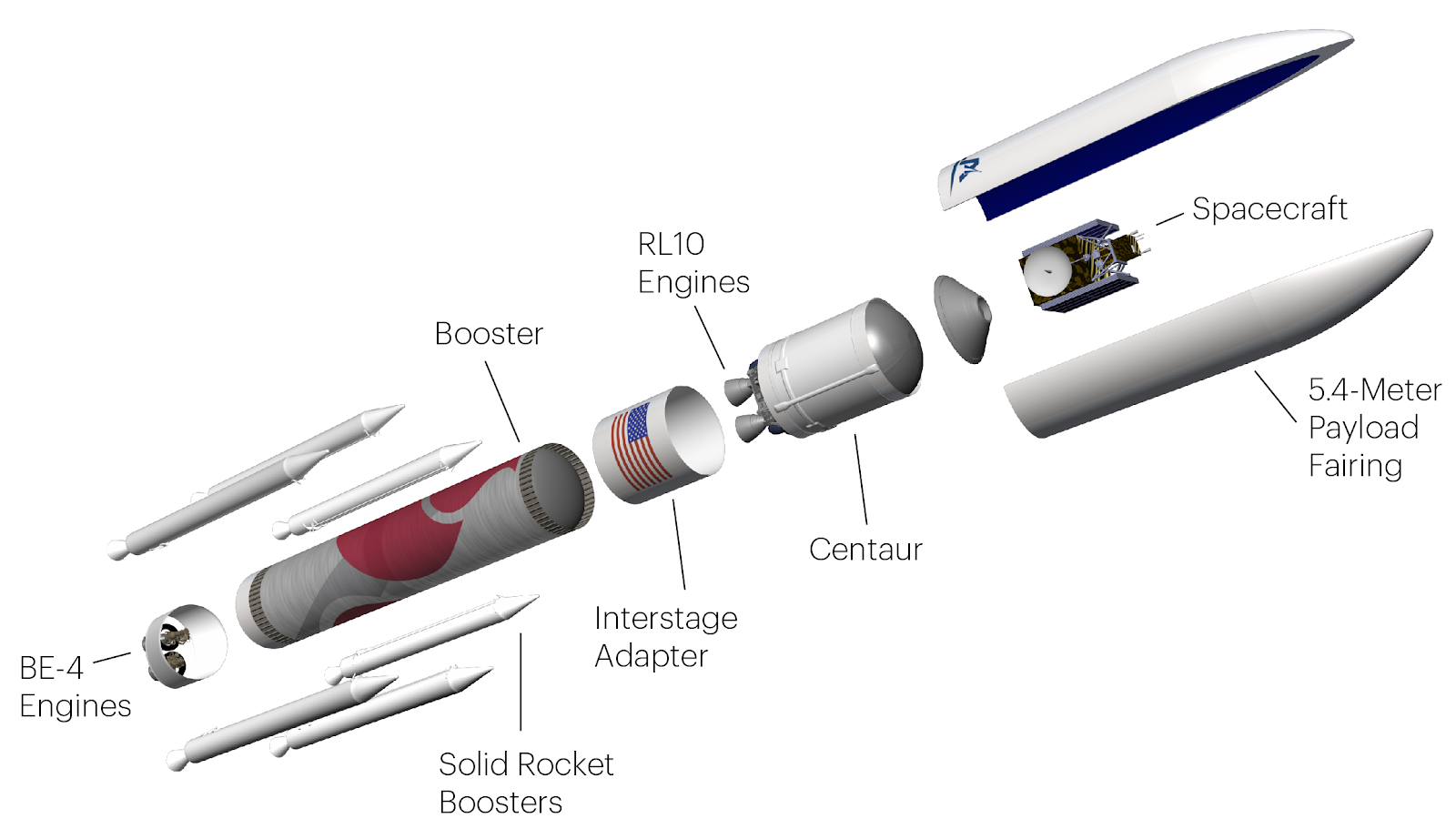
Private Peregrine moon lander stacked in ULA (United Launch Alliance) Vulcan rocket. And it's ready for lift-off on January 8. 

Peregrine moon-lander looks like any other moon lander. The difference is that Peregrine is a private project. That is a good example of flexible innovations. A private corporation makes the moon-lander. That can take samples from the Moon's surface. Private space corporations are rising actors in space research in technical and scientific ways. 

Private corporations offer flexible platforms that can operate with things like space stations and other similar things. Private space industries are not only communication satellites. The private space industry also wants to benefit from low- and zero-gravity conditions for laboratories. 

And remote-controlled miniature shuttles can also operate as manufacturing platforms for complicated molecules and nanomechanics. This is one of the reasons why civilians are also interested in Scramjet engines and hypersonic flight. 

The air-breathing scramjets offer the possibility to make a cheap and effective launch platform for miniature shuttles that can used as remote-controlled laboratories. When those systems finish their operations. They can return the merchandise to the ground. That is one reason why those miniature robot shuttles are under development. 


"The Peregrine prior to being loaded atop the ULA Vulcan rocket (Image credit: Astrobotic" (Space.com/Private Peregrine moon lander is stacked on ULA Vulcan rocket ahead of Jan. 8 launch)


ULA:s Vulcan-Centaur rocket. 


"Artist's illustration of ispace's Series 2 robotic lander on the surface of the moon (Image credit: ispace)" (Space.com/Japan's ispace shows off a tiny moon lander for its 2nd moon mission in 2024)


Another system that travels to the Moon is the Japanese miniature lander. The Japanese "ispace" corporation introduces its miniature moon-lander along with miniature rovers. The miniature space systems allow to creation of new models for moon and planetary missions. 

A large number of AI-controlled miniature landers and drone swarms can used as the non-centralized solution for space missions. The system can be based on miniature actors. They have different types of sensor packs. Those systems can connect their abilities in their entirety. And that thing is the base of drone swarms. 

A large number of simple and cheap systems can form a drone swarm that acts like one complicated system. The difference between those drone swarms and one complicated system is that. Destruction of one drone doesn't destroy the entire swarm. 

Another remarkable thing is that miniaturized technology makes it possible also small robots can carry multiple sensors and effective computers. That allows them to run complicated AI algorithms. That allows them to make versatile operations. 

That base is in non-centralized calculations and the ability to connect their data into one entirety. Traditional space systems are large and complicated systems. The smaller but larger group of different probes makes it possible that even if one participant's mission fails. The mission can continue. Also, a swarm of landers or drones can cover a larger area. Then one single lander. In some visions, similar helicopter technology that operates on Mars can be used with those landers. 

Those systems can equipped with Kamov-type opposite rotating rotors, and they can carry the drone that is equipped with seismic sensors and sample-taking systems. Things like miniature magnetometers and laser spectrometers make those systems flexible and versatile tools. 


https://www.space.com/peregrine-moon-lander-stacked-ula-vulcan-rocket

https://www.space.com/japan-ispace-moon-lander-2nd-mission

https://www.ulalaunch.com/rockets/vulcan-centaur

https://en.wikipedia.org/wiki/Ispace_(Japanese_company)


Metamaterials: the key for making self-assembly layers and machines.

 Metamaterials: the key for making self-assembly layers and machines.


Metamaterials especially metamaterials that can return to their original shape after damage are interesting and revolutionizing tools. Most of those materials are in the polymerase chain reactions. One version. How to make this type of self-assembling material is to connect the polymer with the metal bites. In the simplest model, the self-chaining polymer makes a platform. 

The system puts the metal bites over that network. Then it melts metals over the polymer network. In some other models at the edge of the metal is the polymer. When those metal alloy plates. Or, as an example metal-silicone compounds will take close to each other. The polymers make touch with each other. In some visions, this kind of thing can made using DNA-controlled crystals. That thing can be an artificial silicone-based lifeform. 

*************************************************************


"A 3D-printed Möbius strip (left) and odd-numbered metaring (right). These are both non-orientable objects that will necessarily have a point along the ring that does not deform. Credit: Xiaofei Guo" (ScitechDaily.com/Unlocking the Secrets of Mechanical Memory in Metamaterials)


"A 3D-printed Möbius strip (top) and two odd-numbered metarings (middle and bottom). These are all non-orientable objects that will necessarily have a point along the ring that does not deform. Credit: Xiaofei Guo". (ScitechDaily.com/Unlocking the Secrets of Mechanical Memory in Metamaterials)

*************************************************************

In some models, genetically engineered silicon algae can make complete silicone structures. And then the system can melt metal alloy over that structure. The silicone algae are tiny algae with a silicone shell. 

It's possible. That genetically engineered bacteria can spin the silicone network that is like silicone canvas. That is a good platform for metal structures. 

If we have metamaterial, that can return to its original shape after damage. That kind of thing makes SciFi movies true. This kind of material is introduced in Stephen King's novel "Christie". In some visions, the holes in metamaterial can fixed by putting the plate in the hole. 

And then that material simply melts itself into the hole. In some visions, damage makes small wires or "hair" in that kind of metamaterials. Then the repairment system just puts the repairment bite at that point. And then it conducts electricity in that thing. That makes those bites melt into one piece. But if that process is possible to make without outcoming effects. That makes those metamaterials more effective. 

Self-assembling metamaterials require some kind of mechanical memory, that controls the movements of those layers. Benefiting those things requires complete knowledge of mechanical memory. When researchers find how that thing works they can make many new things. And one of them is self-repairing structures. 

Metamaterials are new things in robotics. The system allows to make the new type of complicated structures. And those kinds of things are the new types of tools in space and other places. There are needed ultimate strength and flexibility.


https://scitechdaily.com/unlocking-the-secrets-of-mechanical-memory-in-metamaterials/

The system can create quantum-correlated photons from sunlight.

"Correlated photon pairs, generated via sunlight-pumped spontaneous parametric down-conversion in a nonlinear crystal, demonstrate ghos...