Sunday, December 31, 2023

Private space companies also make moon landers.

    Private space companies also make moon landers. 


Private Peregrine moon lander stacked in ULA (United Launch Alliance) Vulcan rocket. And it's ready for lift-off on January 8. 

Peregrine moon-lander looks like any other moon lander. The difference is that Peregrine is a private project. That is a good example of flexible innovations. A private corporation makes the moon-lander. That can take samples from the Moon's surface. Private space corporations are rising actors in space research in technical and scientific ways. 

Private corporations offer flexible platforms that can operate with things like space stations and other similar things. Private space industries are not only communication satellites. The private space industry also wants to benefit from low- and zero-gravity conditions for laboratories. 

And remote-controlled miniature shuttles can also operate as manufacturing platforms for complicated molecules and nanomechanics. This is one of the reasons why civilians are also interested in Scramjet engines and hypersonic flight. 

The air-breathing scramjets offer the possibility to make a cheap and effective launch platform for miniature shuttles that can used as remote-controlled laboratories. When those systems finish their operations. They can return the merchandise to the ground. That is one reason why those miniature robot shuttles are under development. 


"The Peregrine prior to being loaded atop the ULA Vulcan rocket (Image credit: Astrobotic" (Space.com/Private Peregrine moon lander is stacked on ULA Vulcan rocket ahead of Jan. 8 launch)
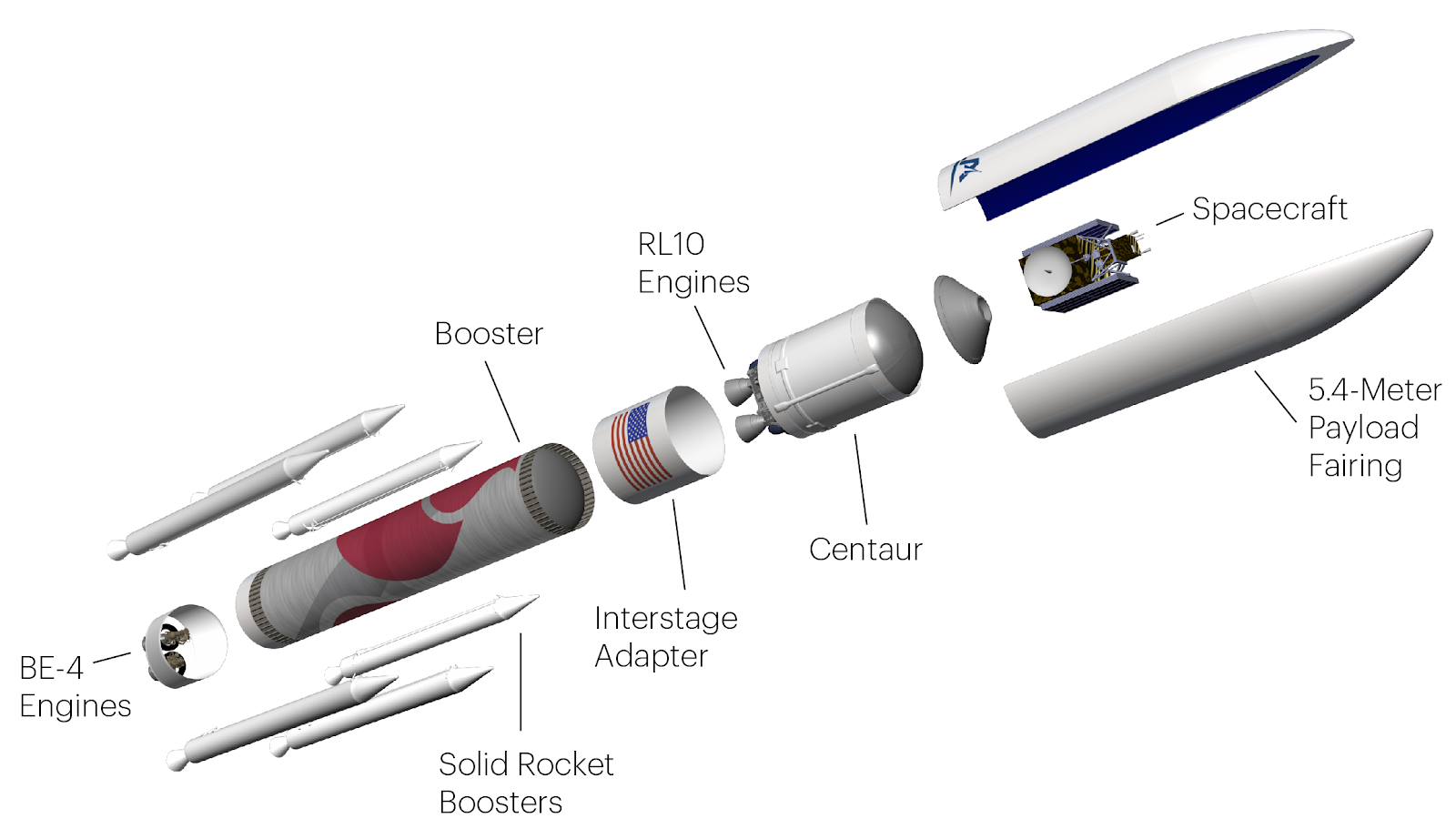

ULA:s Vulcan-Centaur rocket. 


"Artist's illustration of ispace's Series 2 robotic lander on the surface of the moon (Image credit: ispace)" (Space.com/Japan's ispace shows off a tiny moon lander for its 2nd moon mission in 2024)


Another system that travels to the Moon is the Japanese miniature lander. The Japanese "ispace" corporation introduces its miniature moon-lander along with miniature rovers. The miniature space systems allow to creation of new models for moon and planetary missions. 

A large number of AI-controlled miniature landers and drone swarms can used as the non-centralized solution for space missions. The system can be based on miniature actors. They have different types of sensor packs. Those systems can connect their abilities in their entirety. And that thing is the base of drone swarms. 

A large number of simple and cheap systems can form a drone swarm that acts like one complicated system. The difference between those drone swarms and one complicated system is that. Destruction of one drone doesn't destroy the entire swarm. 

Another remarkable thing is that miniaturized technology makes it possible also small robots can carry multiple sensors and effective computers. That allows them to run complicated AI algorithms. That allows them to make versatile operations. 

That base is in non-centralized calculations and the ability to connect their data into one entirety. Traditional space systems are large and complicated systems. The smaller but larger group of different probes makes it possible that even if one participant's mission fails. The mission can continue. Also, a swarm of landers or drones can cover a larger area. Then one single lander. In some visions, similar helicopter technology that operates on Mars can be used with those landers. 

Those systems can equipped with Kamov-type opposite rotating rotors, and they can carry the drone that is equipped with seismic sensors and sample-taking systems. Things like miniature magnetometers and laser spectrometers make those systems flexible and versatile tools. 


https://www.space.com/peregrine-moon-lander-stacked-ula-vulcan-rocket

https://www.space.com/japan-ispace-moon-lander-2nd-mission

https://www.ulalaunch.com/rockets/vulcan-centaur

https://en.wikipedia.org/wiki/Ispace_(Japanese_company)


Metamaterials: the key for making self-assembly layers and machines.

 Metamaterials: the key for making self-assembly layers and machines.


Metamaterials especially metamaterials that can return to their original shape after damage are interesting and revolutionizing tools. Most of those materials are in the polymerase chain reactions. One version. How to make this type of self-assembling material is to connect the polymer with the metal bites. In the simplest model, the self-chaining polymer makes a platform. 

The system puts the metal bites over that network. Then it melts metals over the polymer network. In some other models at the edge of the metal is the polymer. When those metal alloy plates. Or, as an example metal-silicone compounds will take close to each other. The polymers make touch with each other. In some visions, this kind of thing can made using DNA-controlled crystals. That thing can be an artificial silicone-based lifeform. 

*************************************************************


"A 3D-printed Möbius strip (left) and odd-numbered metaring (right). These are both non-orientable objects that will necessarily have a point along the ring that does not deform. Credit: Xiaofei Guo" (ScitechDaily.com/Unlocking the Secrets of Mechanical Memory in Metamaterials)


"A 3D-printed Möbius strip (top) and two odd-numbered metarings (middle and bottom). These are all non-orientable objects that will necessarily have a point along the ring that does not deform. Credit: Xiaofei Guo". (ScitechDaily.com/Unlocking the Secrets of Mechanical Memory in Metamaterials)

*************************************************************

In some models, genetically engineered silicon algae can make complete silicone structures. And then the system can melt metal alloy over that structure. The silicone algae are tiny algae with a silicone shell. 

It's possible. That genetically engineered bacteria can spin the silicone network that is like silicone canvas. That is a good platform for metal structures. 

If we have metamaterial, that can return to its original shape after damage. That kind of thing makes SciFi movies true. This kind of material is introduced in Stephen King's novel "Christie". In some visions, the holes in metamaterial can fixed by putting the plate in the hole. 

And then that material simply melts itself into the hole. In some visions, damage makes small wires or "hair" in that kind of metamaterials. Then the repairment system just puts the repairment bite at that point. And then it conducts electricity in that thing. That makes those bites melt into one piece. But if that process is possible to make without outcoming effects. That makes those metamaterials more effective. 

Self-assembling metamaterials require some kind of mechanical memory, that controls the movements of those layers. Benefiting those things requires complete knowledge of mechanical memory. When researchers find how that thing works they can make many new things. And one of them is self-repairing structures. 

Metamaterials are new things in robotics. The system allows to make the new type of complicated structures. And those kinds of things are the new types of tools in space and other places. There are needed ultimate strength and flexibility.


https://scitechdaily.com/unlocking-the-secrets-of-mechanical-memory-in-metamaterials/

Can we connect ChatGPT or some other language model with Virtual reality?

  Can we connect ChatGPT or some other language model with Virtual reality?


It's possible that in the next generation virtual worlds move avatars. Which acts as a communication port for ChatGPT. In that case, the human user can use those robot avatars to ask for advice on how to operate in the virtual world. The thing in ChatGPT and its cooperation with humans in virtual worlds is that this type of solution denies that the server will get in the same time billions of similar queries that can overload certain memory addresses. 

And that thing can cause temporary system malfunction. The complicated virtual world runs on two or more servers, and if one server gets stuck the swap-server sees a rising error level. The other server continues the operation. But it removes the point, where the error level starts to rise. 

This requires that the VR and its background systems use advanced AI-based systems that keep complete databases, which the system can use to solve problems. When the system sees a problem it stores it in the error-correction server. And then AI along with human operators will start to handle that problem. 

In that case, the reason for too many queries to one database address can be the result. The system handles all queries that have the same values. The separation between "emergencies" and normal queries should be done. And one version is that if the communication is done, through the avatar. 


The system can make digital twins for vehicles and environments in the virtual world. The digital twin allows us to create complete simulations of how machines operate and how flexible and comfortable the environment is. 

The digital twin of the vehicle and systems allows to testing of different types of vehicles at a certain crossroads. It's possible that in some cases the position of the steering wheel in a lorry or the height of the driver causes a situation in which the driver must go closer to the crossing roads than usual. 

But in the modern world computers can simulate multiple things with a very high accuracy. If the system knows the weight of the vehicle, the coefficient of friction. And the strength of metal alloys and other materials, that system can create a perfect simulation of the machine's internal and external operations. 

Virtual reality makes it possible to test environmental solutions. Things like treadmills with turning platforms help to make the simulation environment flexible and comfortable. The steep uphill may cause a situation. That walker feels uncomfortable. 

And we must ask ourselves: will we rather go uncomfortable uphill to buy some merchandise or buy that merchandise from let's say 150 m farther, but more comfortable place? The thing that can make some streets uncomfortable can cause that especially heavy transporters like lorries go very close to people. 

Saturday, August 12, 2023

What would you do with an absolute black surface?

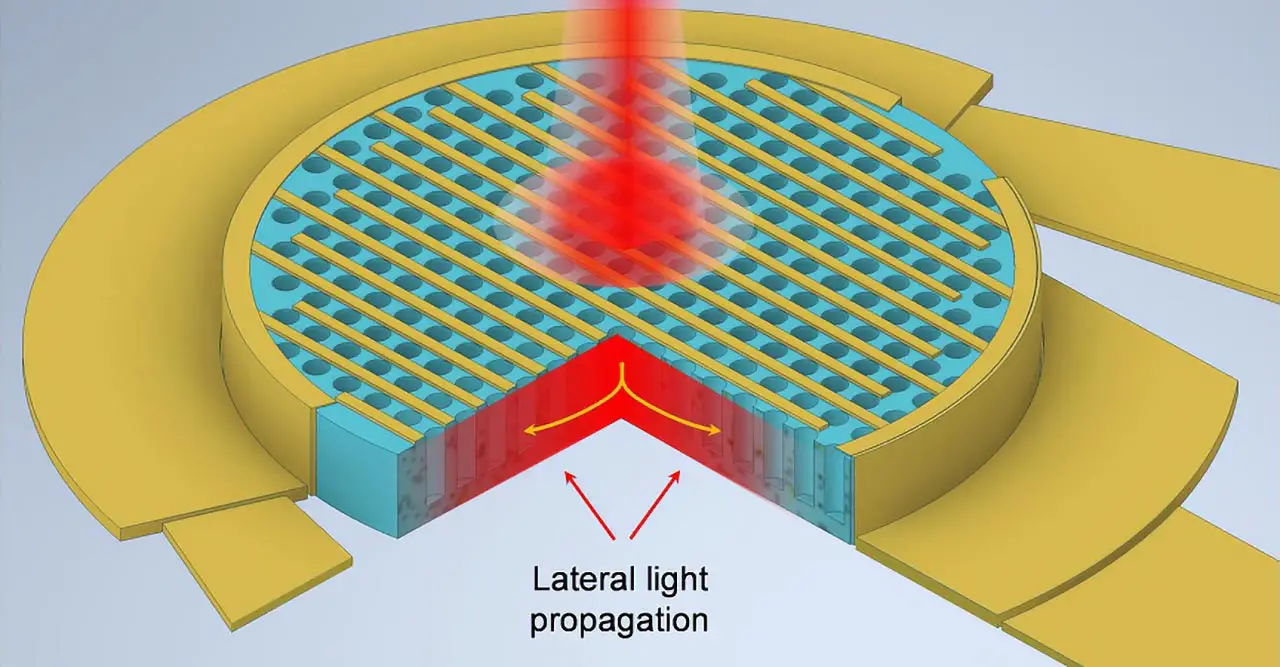
 Light absorption is a situation where reflection is denied. And that thing makes the surface seem black. In silicon, there is a nanostructure that can revolutionize absorption. The nanostructure traps photons inside them and then conducts light in a horizontal direction. That kind of structure can deny reflection. And it can be used for many things. Highly accurate optical technology can use this material to deny reflection.

Another place where this light absorption is possible is on surfaces that should deny the laser-ray reflection. And of course, highly advanced stealth systems can use this kind of silicone structure. If there is no reflection, the aircraft looks like a shadow. This new silicone structure can fix the problem of absorption.


"UC Davis researchers have developed a new approach to improve silicon-based photodetectors’ performance, potentially revolutionizing optoelectronics integration into conventional circuits and leading to faster, more affordable computer networks and imaging technology advancements." (ScitechDaily.com/Illuminating the Future: Enhanced Light Absorption in Silicon Photodetectors)


"Photon-trapping micro- and nano-sized holes in silicon (Si) make normally incident light bend by almost 90°, making it propagate laterally along the plane and leading consequently to increased light absorption in the NIR band. Credit: Qarony, Mayet, et al., doi 10.1117/1.APN.2.5.056001" (ScitechDaily.com/Illuminating the Future: Enhanced Light Absorption in Silicon Photodetectors)

The problem with traditional light-absorbing materials is that they store energy in their structure. That thing makes black surfaces turn hot very soon. The structure must conduct that energy somewhere, or it will turn visible in the infrared. Traditional black turns hot because it stores radiation in it, and then it pushes energy out of it in the form of IR radiation. IR radiation is visible in IR cameras. If some material has no reflection at all and cannot conduct energy away from it, that material will melt sooner or later.

In reflection, wave movement loads energy into particles until their energy level rises above that of their environment. When a particle's energy level rises above that of impacting radiation, that particle sends that extra energy as wave movement, whose length is the same as the particle's size. And that means particles adjust the wave movement's length into another.


https://scitechdaily.com/illuminating-the-future-enhanced-light-absorption-in-silicon-photodetectors/

Moving cities and mega-ships: could that fantasy turn real?


Originally, some people said that caravans could form a moving village. And then somebody turned that idea into a fantasy where city-size vehicles travel around Earth. Another thing that fed those ideas was the moving launch pad. That NASA uses to carry rockets into their launch sites.

The idea of moving cities might seem like a fantasy. The model for giant moving vehicles that can be city-size is taken from the idea that the NASA tractor that it uses to transport rockets to their launching site can turn into a moving building.

In that vision, the giant self-moving system turned into a moving base that could operate on the moon's surface or in underwater conditions. In another version, this giant moving building could be equipped with an air cushion and turn into a giant hovercraft.


The second film above tells about the world's largest ships. And somebody might imagine houses in place of containers. It's possible to transform those megaships into moving villages.

In some fantasy visions, about 100 of those tractors or moving launch pads can be connected by using plates.

And there could be houses or other buildings on those plates. Another version is the large hovercraft that can connect moving cities and mega-ships together. That kind of system is, of course, very large. When we think about the possibility of making large robot bodies where people can live, those things might make the moving city possible. But in those cases, the problem is in motivation. Why does somebody want to fund that kind of project?

Sunday, July 9, 2023

LOFAR unveils the unintended electromagnetic echoes of Starlink satellite.


The network of satellites is a useful tool. If the satellites are forming a layer that covers the entire Earth that kind of network can be an extremely useful tool for location, recon, and power supply by using wireless power transmission. The satellite network with telescopes can see every single missile launch on Earth if those satellites can cover an area that is large enough. The satellites can have anti-ASAT systems that can protect them against physical ASAT weapons like anti-satellite missiles. 

The unintended echoes of low-flying satellites are problematic things. Unintended electromagnetic echoes form when electromagnetic radiation impacts satellites. And then that radiation reflects from those objects. The fact is that the reflection of electromagnetic radiation is the thing. That makes a major part of electromagnetic fingerprints of space junk. In the past, the U.S. Air Force researched the possibility to make an electromagnetic shield around Earth by using pins.

The idea was good pins act like Tesla coils. The practical problem was that those pins must be precisely on the same level. And that requires extremely highly accurate positioning of those pins.  But the system requires that those pins are at the same level and all of those pins are in the same direction. If that kind of form of pins is possible to make that system. It can make it possible to create a radio-wave layer between those pins.  


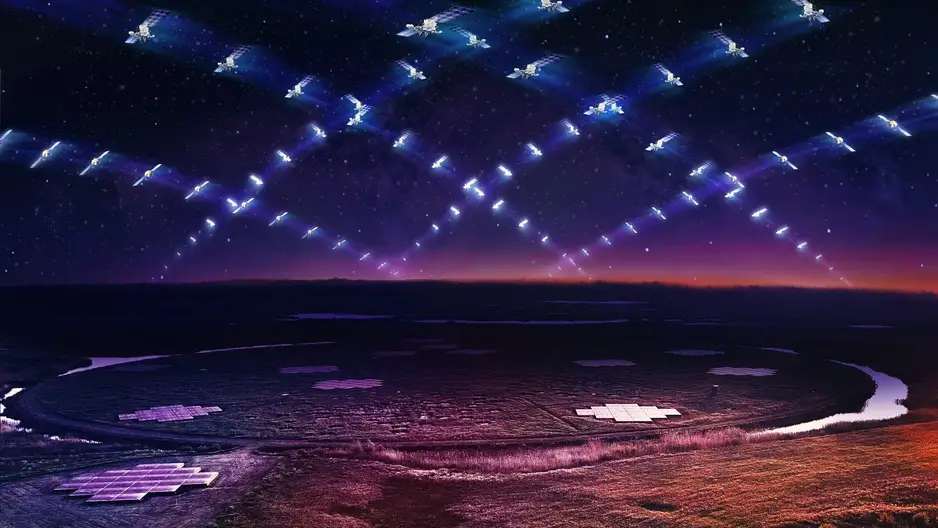
"Figure 1: Artist’s impression of a large satellite constellation in low-Earth orbit circling above the LOFAR telescope. Credit: Daniëlle Futselaar (artsource.nl)" (ScitechDaily.com/LOFAR Uncovers Starlink’s Secret: Unintended Electromagnetic Emissions From SpaceX’s Satellites)

"Scientists have used the Low Frequency Array (LOFAR) telescope to observe unintended electromagnetic radiation from SpaceX’s satellites. This radiation, different from regular communication signals, may disrupt astronomical research. The study calls for regulation to protect radio astronomy from such unintended radiation and commends SpaceX for collaborating on mitigation efforts".(ScitechDaily.com/LOFAR Uncovers Starlink’s Secret: Unintended Electromagnetic Emissions From SpaceX’s Satellites)

There is the possibility to create an artificial ionosphere for the moon using Tesla coils. The radiowaves travel between those pins. And the pike aims those radiowaves to the moon. 

If multiple power satellites aim their lasers at one point, they can destroy Earth's surface. The thing is this, the same satellites used as the power supply can use in ASAT(Anti-Satellite) and ABM (Anti-Ballistic Missile)missions. 

There are plans for sending power satellites that send energy to the ground by using lasers, radio masers, or microwaves. Those satellites could benefit high energy ions of the Van Allen belt. And in that passive system satellite, or network of relay satellites can make the system that can send electricity wirelessly to every point on the Earth. 

The problem is that multiple satellites can connect their power and aim their transmitters at one point. That system acts like Death Star's laser. That kind of modular system could be very much powerful. If multiple laser satellites aim their laser at one point that can make those systems dangerous also to the ground objects. 

The system can give energy to high-flying aerial vehicles. The system can harvest energy from the Earth's ion belts. But it also can benefit radio waves that are sent from the ground stations. This kind of system can connect the power satellite and communication tools into one entirety. 

Intelligent technology is the future of agriculture.

In some visions, the cereal can be two species. While those plants are growing. They can have the same ability with sundews. They can eat bugs, and when those plants are ready they can transform into normal cereals. The idea for this xenomorph vegetable is that by connecting two DNAs the researchers can create a vegetable that can turn into another vegetable when farmers need to reap it. 

The ability to manipulate the DNA makes it possible to create new types of crops. Those crops can create antibiotics while they grow or they can be poisonous while they are green. When they turn ripe, those artificial crops can remove their poison. 

Biotechnology and advanced nanotechnology make it possible to create new biological products. The next-generation artificial crops can use to make things like medicines. Or by making hybrids with things, like hemp and the cells that make the spider web. This thing makes it possible to create next-generation ropes that are stronger than steel. That is one version of what intelligent nanotechnology can make. 

In some visions the biotechnical furs and skin replace animals. The ethic skin means animal skin made of cloned skin cells. Those skin cells will produce in a petri dish. And they can use a similar way with "natural skin". Another thing is that the same technology can use for producing skin transplants for humans. 


"Barath Raghavan, an associate professor at USC Viterbi, is pioneering “computational agroecology,” a novel approach to sustainable agriculture that utilizes computational tools to design diverse, optimal farming ecosystems. The researchers have conceptualized agriculture as a search through a “state space,” which comprises all possible configurations of a system, such as a farm, enabling farmers and researchers to explore, simulate and find optimal combinations of various factors like crop selection, soil type, weather conditions, irrigation, and pest control, potentially revolutionizing farming planning and techniques". (ScitechDaily.com/Computational Agroecology – The Future of Farming)


The miniature robots that can use to clean plantations from bugs are poison-free application that uses AI to control the nutrients and water of the system. The AI can use small-size robots to keep harmful bugs away. Or the system can use microchipped ants and other cyborg bugs to clean the plantation. 

One thing that makes miniature robots suitable for protecting plantations is that they are multi-use tools. The robot can clean fungus from grain stalks. And the same system can remove all bugs that can danger the plantation. 

AI is an ultimate tool when the system must control large entireties. The AI can observe things like plantations with very high accuracy. The top level of these kinds of visions is the entirety. Nanotechnical computers can observe the things like poisons and water levels with nutrients from every single grain of straw. 

The nanocomputers can be driven to the leaves of those straws. And they can use the flow in the grain straw veins as a power source. Those nanotechnical computers can look like small bugs that push their legs in the veins. There are small water wheels that give energy to those robot mites. Those systems can communicate with each other by using laser LEDs. If there is enough large number of those miniature robots the system can observe every single grain of straw until the grain is cut. Before the reaping the system calls those miniature robots away. 


https://scitechdaily.com/computational-agroecology-the-future-of-farming/

The system can create quantum-correlated photons from sunlight.

"Correlated photon pairs, generated via sunlight-pumped spontaneous parametric down-conversion in a nonlinear crystal, demonstrate ghos...