Monday, July 18, 2022

The nanomachines are bringing extreme accuracy to medical work.


The image above: the nanomachine-based medicals can look like this. When harmful cell eats those machines they start to rotate. The nano-size whips are terminating the internal structure of those cells. The thing that makes those molecules find their target could be the millimeter-sized submarine that swims in the human body. 


The nano-submarine can simply slip those nanomachines through the cell membrane or ion pumps. Or the cyborg version of that system can simply carry the cells that are producing non-effective DNA. And then that nano-submarine will fill the cell by using the DNA molecules. 

There is a possibility that the nanomachine just fills the cancer cell with empty DNA. That thing denies the work of the mitochondria because the cell is full of that molecule. But the more sophisticated solution would be to use the DNA bites that activate the programmed death of the cancer cells or incoming bacteria. 

The idea in nanotechnology-based medicines is that the same medicals can use against bacteria and cancer cells. One version of those solutions is the plastic or silicone bag that slips into the cell. And then that silicone bag will pull liquids in it. Sooner or later the bag will fill the entire cell. But the manipulated DNA can also use as antibiotics that are effective against cancer cells and bacteria. In this vision, the nanomachine just injects the DNA into the cell which orders the cell to die. 

The bacteria or cells can also transform to produce some antibiotics inside them. When the bacteria change their genomes the manipulated bacteria can send the DNA bite that involves the programmed death of another bacteria. Or the nutrient would contain nanotechnologies like a "whip molecule" that destroys mitochondria or the cell membrane. 

Also, things like nanolasers can be effective against cancer. The nanolasers can destroy the mitochondria or the DNA inside the targeted cells. 


These systems are extremely powerful if they operate perfectly. And operators can control those miniature robots that are swimming in the human body over the Internet. 


The nanomachines are offering new models for a cure for cancer. Maybe someday the nanomachines are injecting a "death code" or artificial DNA bite that activates the programmed death of the cancer cell. 

There is the possibility that in the future the nano machines simply change or fix the DNA inside the cancer cells. That thing makes it possible for the cancer cells to be transformed into normal cells. Or the nanomachines can inject artificial DNA bite in the cell that activates the programmed death of that cell. 

But the ability to fix and transform the DNA makes immortality possible. Researchers can also stop aging. When the researchers read the code of the DNA. When they find the right points of the base pairs they can cut those base pairs away from the DNA. 

This makes it possible to interconnect the DNA bites with wanted abilities between species. Scientists found species that are not aging. And the background of that strange ability is in the DNA of those species. That makes it possible to cut those DNA sequences off those species and connect them with every other DNA. 


https://scitechdaily.com/a-new-antibiotic-can-kill-even-drug-resistant-bacteria/amp/


https://scitechdaily.com/dna-nano-device-injection-found-to-be-safe-for-medical-use/amp/


https://scitechdaily.com/secrets-of-longevity-revealed-scientists-find-species-that-essentially-do-not-age/


https://scitechdaily.com/stanford-developed-millirobot-swims-in-your-body-and-delivers-medicine-to-places-that-need-it/amp/


Image: https://scitechdaily.com/a-new-antibiotic-can-kill-even-drug-resistant-bacteria/amp/


https://artificialintelligenceandindividuals.blogspot.com/

Friday, July 8, 2022

The new computers might have photonic brains.


The intelligent contact lenses that are using IR-systems can turn a person's eyes to shine with red light. There is the possibility that the people of tomorrow use the intelligent contact lenses that are giving them the ability to connect themselves with the Internet. 

The small IR camera also makes it possible for that person sees in total darkness. By using those intelligent contact lenses the person can see things that surveillance cameras or drones are seeing. And it brings the metaverse closer to reality. 

The new self-calibrating photonic microchip can boost the photonic information superhighways. But those photonic microchips can have also other roles. That photonic microchip can transform qubits into binary bits simply by reading the information that is stored in qubits from state to state. So information can be driven to the binary system by putting states after each other. And that turns qubits into a row of bits. 

But the optic microchips are the ultimate tools for computers that mission is to operate in powerful magnetic fields. Photonic data transmission is not so vulnerable to EMP pulses. And that means the photonic microprocessors can resist electromagnetic radiation more effectively than regular microprocessors. 

So that kind of ability can make photon processors suitable to use in the probes that are operating near the sun. Or they can be useful for the computers that are used in military areas. 

One of the places where photonic microprocessors are suitable is intelligent contact lenses. Those contact lenses can project metaverse to the eyes of the person. But they can also use to protect people's eyes against radiation. There could be small-size CCD cameras that are transmitting information to the eye. 

The intelligent technology denies eye damage and blinding in cases where the user of that system looks at bright light. The system can use visual light or IR mode depending on the situation. There is the possibility that. The small-size red-light LEDs that are used to make the IR system work turn a person's eyes red. 

But there is possible also to connect data to the GPS. But information from drones and intelligent action cameras, other surveillance systems, and intelligent camera-based targeting systems can also deliver data to those intelligent contact lenses. 

The phonic processors can use laser LEDs to transmit data through them. That means those low-voltage systems can benefit the nervous electricity of the human body. Things like intelligent contact lenses that should use remote- or wireless energy load can also use photonic processors. Those processors can operate in low voltage conditions. And the energy to those contact lenses can deliver in the form of light. 

Of course, there could be a nano-size battery. But if the outer core of miniature contact lenses is covered by silicon. That makes it possible to turn the outer layer of those things to operate as a photovoltaic cell or solar panel making those systems capable to operate longer. 


https://www.mojo.vision/

https://phys.org/news/2022-07-world-self-calibrated-photonic-chip-interchange.html


Image: https://www.mirror.co.uk/science/scientists-develop-terminator-inspired-smart-23078102


https://artificialintelligenceandindividuals.blogspot.com/

Wednesday, July 6, 2022

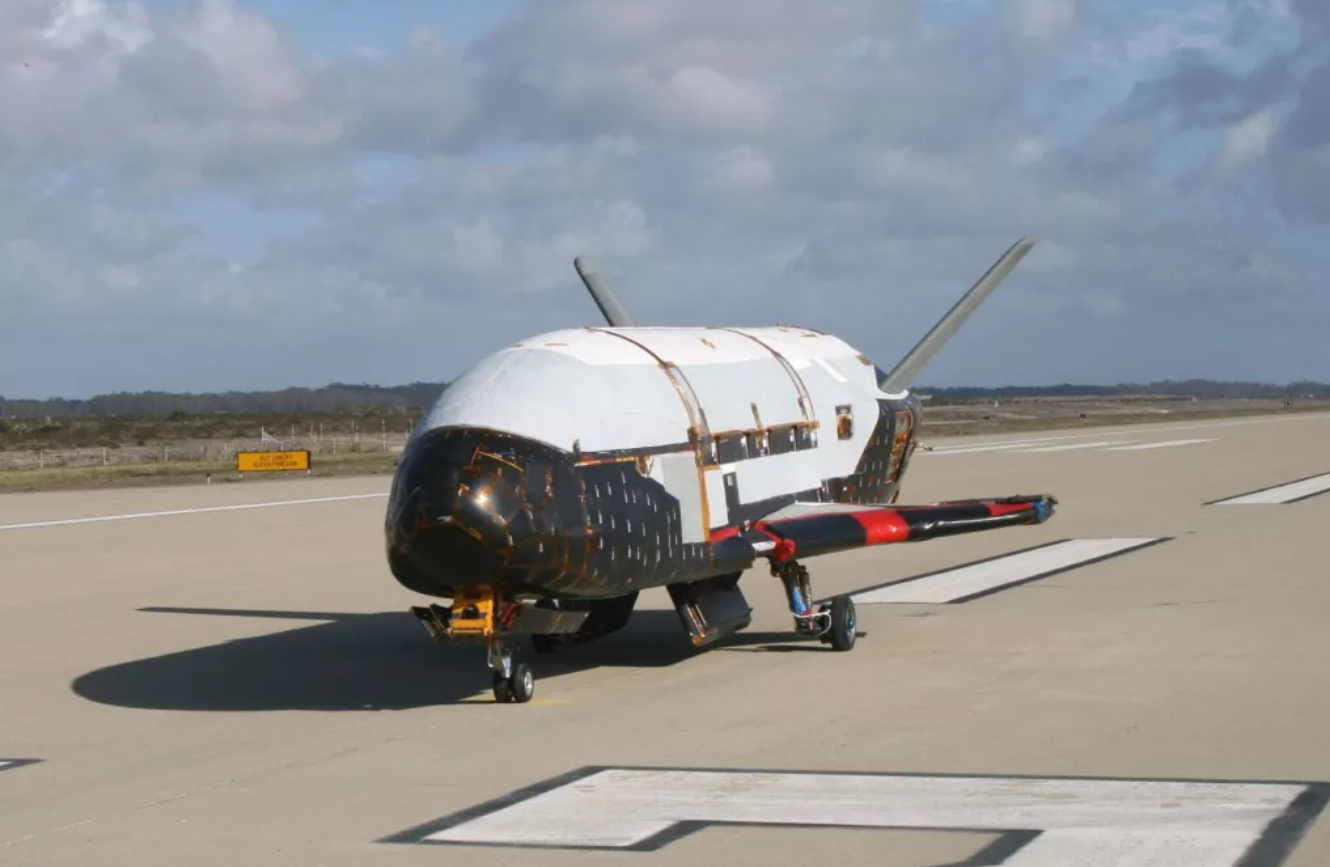
X-37B has set a new flight record.


The mysterious X37B robot plane has been spent in space for over 770 days. And the thing that makes this plane mysterious is its secrecy. The X37B is only 8 meters long and the small size of that plane means that there are made experiments that don't require large-size space. The type of those tests is classified. But there is the possibility that those tests that must be made in a remote-controlled laboratory module have something to do with nanotechnology. 

When we are thinking about the purpose of X37B, we must remember that the space shuttle is the platform. So the small-size system can use as a remotely controlled laboratory. But there are rumors that X37B can be also the ASAT (Anti-Satellite) weapon. Or it can also use as an orbital bomber. There is the possibility that the mysterious EM-drive or microwave drive of NASA is an antisatellite weapon. 

The microwaves will aim to target satellites, and that thing destroys at least satellite electronics. There is also the possibility that small-size chemical lasers which are used in the metal industry can install in the cargo bay of X37B. 

The fact is that. The small hydrogen bomb can be put in the cargo bay of the X37B and then the system can be used as an orbital cruise missile. If the war doesn't begin the shuttle can bring that hydrogen bomb back to the ground. If the weapon must be used the cruise missile can dive into the enemy target and detonate itself. 

The fact is that there is the possibility that the X37B has many missions like some chemical tests. But it can also be used as a high-altitude recon platform. There is the possibility that X37B has ELINT missions but one of its missions can be to search other satellites. The purpose of that shuttle can be to look for marks about secretive satellites has been tried to capture by the Chinese or Russians. 

https://www.space.com/x-37b-military-space-plane-nears-mission-duration-record

Image: https://www.space.com/x-37b-military-space-plane-nears-mission-duration-record

The US military wants to send a fusion reactor to orbiton in 5 years.


The space would be a good place for a fusion reactor. That reactor can deliver energy to the entire Earth. And the new aerial systems like plasma-jet engines need more and more energy. 

The idea to use an orbital fusion reactor is interesting and it's like in some SciFi vision. The fusion reactor can make one model of energy supply possible. That model is that the systems that are operating in the field don't have an internal power source. 

All energy that those systems use is delivered to them in the form of radio or maser rays. That allows connecting power supply and communication. And the orbital fusion reactor will also work as an orbital laser weapon because those high-power lasers can also use as weapons against hostile targets. 

The orbital fusion reactor can use vaporized lithium-deuteride as fuel. The lasers or microwaves will melt the lithium deuteride. In orbital trajectory is no oxygen that can detonate the lithium hydride that is used as the fuel. 

And then, the system drives vaporized fuel to the accelerator. In that accelerator, magnetic fields and laser rays will start the fusion. The problem with lithium-deuteride and its use in fusion reactors is that this material is high inflammable. If there is any oxygen in the melting process that causes detonation. But there is no air at orbital. So there melting of the lithium can happen without the risk of oxygen contact. 

There are two ways to make the orbital fusion. The first one is to use internal fusion in the chamber. In that system, fusion will happen around the laser element. And that laser will send energy to the wanted point. 

And the second one is to use two crossing ion beams. Al laser ray will aim to the point where those beams with different polar ions will cross and that allows making the artificial sun in the orbiter. 

The orbital fusion reactor is not the only way to make powerful energy rays. There is the possibility that positrons or anti-electrons can be produced from the electrons of the solar wind. Then those positrons will put to react with electrons around the laser element. And that thing can use to make powerful energy sources. 


https://www.newsweek.com/american-military-fusion-reactor-space-avalanche-energy-orbitron-1721359


https://en.wikipedia.org/wiki/Lithium_hydride


https://en.wikipedia.org/wiki/Thermonuclear_weapon


Image: https://www.newsweek.com/american-military-fusion-reactor-space-avalanche-energy-orbitron-1721359

The Airbus Zephyr-drone challenges satellites.


The Zephyr drone is created for the HARPS (High-Altitude Pseudo-Satellite) or atmospheric satellite program. The solar-power drone flies even for months or years in high altitudes. The Zephyr drone can rise to an altitude of 23 kilometers, and it can operate on scientific and military missions. 

HARPS means that high-altitude drones will replace some satellites. Those drones can carry things like radars, communication tools and infrared, and regular CCD cameras. And those drones can also carry small-size orbital vehicles to the high atmosphere before they will be launched. 

The thing that makes the high-flying large-size solar-power drones interesting is that they can rise things like Pegasus-rocket to high altitudes before those rockets will launch. Of course, Pegasus can rise to high altitude by using a balloon. 

Things like peace-time border and sea surveillance can be done using this kind of platform. The high-flying drone can use radars infrared and other kinds of systems that allows the drone to map areas. 

But the fact is that the solar-power-high flying drone can also use to offer mission-critical communication. But the fact is that the high-flying drone that uses solar power and stealth materials can be quite a hard target for air defense. That system can point targets for other weapon systems. 

And in some visions, those drones can arm by using some kind of directed energy weapons that protects them against incoming missiles. 

The thing is that the northern areas are causing problems with solar-power drones. But energy can deliver to those drones from power stations or ships by using the maser-rays or high-power radio waves. The fact is that things like photonic crystals are making solar panels more effective.

And photonic crystals can use to deliver electricity to solar panels. Also, there is an introduced idea that laser rays can deliver electricity to the solar panels of high-flying drones. 


https://www.airbus.com/en/products-services/defence/uas/uas-solutions/zephyr


https://en.wikipedia.org/wiki/Airbus_Zephyr


https://en.wikipedia.org/wiki/Atmospheric_satellite


https://en.wikipedia.org/wiki/Intelligence,_surveillance,_target_acquisition,_and_reconnaissance


https://en.wikipedia.org/wiki/Northrop_Grumman_Pegasus


https://en.wikipedia.org/wiki/Photonic_crystal

Mojo Vision introduced the first working intelligent contact lenses.


Image of the intelligent contact lens. (https://www.mojo.vision/mojo-lens/)


Intelligent contact lenses are working a similar way to intelligent glasses. They can offer an enhanced reality experience for the user. So the runner can see the map of the place and that person's location if the intelligent contact lenses are connected to a mobile telephone or the GPS. The intelligent contact lenses are the contact-lens-looking HUD screens that can offer many possibilities. Mojo's system uses tiny micro-LED screens for delivering the image to the retina. 

If the intelligent contact lens is equipped with a pointer that system can point objects from the computer screen, and then the lens's own HUD screen can zoom those objects. The intelligent contact lenses can also equip with a CCD camera with infrared mode. And that system can offer the user to see in darkness. 

There could be IR-LEDs around that camera. And because the image is transmitted to the retina through the CCD camera. intelligent contact lenses can protect the eyes from bright light. And they allow transferring of everything a person sees or says to the supporter. Those contact lenses can be equipped with small microphones that are using nanotechnology. Intelligent contact lenses can also make data security better. 

When somebody who uses those systems will look at the screen. There is the possibility that there are only QR codes on the screen. And the real images are transmitted to the intelligent contact lenses. That denies other people to see what's happening on the screen. Also, things like images from surveillance cameras and drones can transmit to those intelligent screens. 

The problem with intelligent contact lenses is that their use must follow hygiene orders more carefully than the user of old-fashion intelligent glasses. But cleaning those small screens is a similar process to using regular contact lenses. And every people in the world cannot use contact lenses.


Images and other sources 


https://www.mojo.vision/mojo-lens/

Tuesday, July 5, 2022

Electronic tattoos are the new tools for measuring blood pressure, but they can do much more.


"A new electronic tattoo that can be worn comfortably on the wrist for hours delivers continuous blood pressure measurements at an accuracy level exceeding nearly all available options on the market today. Credit: the University of Texas at Austin" (ScitechDaily.com/Electronic Tattoo Offers Highly Accurate, Continuous Blood Pressure Monitoring)

The electronic tattoo or graphene-based electrodes, implanted under the skin offers an ultimate tool for measuring blood pressure. This kind of electrode can send the data to an intelligent wristband that can communicate with the mobile telephone. One of the versions of that kind of system is the intelligent ring. That ring communicates with mobile devices. 

The term electronic tattoo means small-size microchips or electrodes that are implanted in the body. So maybe in the future those intelligent tattoos can communicate straight with mobile devices and send the data through the internet. But as I wrote electronic tattoos can make many other things. 

If an electronic tattoo is made on to head. That allows following the EEG curves all the time. The electronic tattoo can use to move the prosthesis. And it can transmit data between the computer that controls the prosthesis and the nervous system. Electronic tattoos can use to connect human brains straight with the internet. The system that bases the microchips can take electricity from the nervous system. Or it can use a wireless loader. 

The microchips can communicate with intelligent devices that can the mobile telephone. The sensors are put under the skin of the head. And then, the wires will be put under the skin of the hippie where the mobile telephone usually is. The electronic tattoos at the fingertips can connect with intelligent glasses. 

The intelligent glasses are HUD screens that look like regular glasses or sunglasses. Things like virtual keyboards can project to those screens. And the intelligent tattoo can send the data which key is pushed. Those systems are not needed those tattoos. They must just need to know where is the letter "A". 

So the virtual keyboard's user can use the picture of the keyboard. That is projected to the layer for self-calibration. 

And put finger on some letters. The computer sees where the finger is. The system might ask for the pushed letter to make sure that the system calibration is successful. And if there are problems the person must just say "re-calibrate the system". A virtual keyboard is a good tool in a noisy place where back noise can cover the speech. And also it offers better data security than speech.

But the intelligent tattoo offers the possibility that the person can communicate with the computer by putting the fingers on the table where is the necessary electronics. That means the users of this kind of system will just put their fingers on the layer, and then that system opens the meta interface between the computer and neural systems. 

The intelligent tattoo can also involve data does the person got authorization to use some system. When a person pushes buttons on the keyboard the RFID system in those electrodes tells what kind of privileges the person has to the system. 


https://scitechdaily.com/electronic-tattoo-offers-highly-accurate-continuous-blood-pressure-monitoring/


Image: https://scitechdaily.com/electronic-tattoo-offers-highly-accurate-continuous-blood-pressure-monitoring/


https://artificialintelligenceandindividuals.blogspot.com/

The system can create quantum-correlated photons from sunlight.

"Correlated photon pairs, generated via sunlight-pumped spontaneous parametric down-conversion in a nonlinear crystal, demonstrate ghos...