Monday, July 3, 2023

The many faces of AI


AI and machine learning are revolutionizing the business world. The AI can search multiple objects at the same time. And it can buy and sell to multiple targets at the same time. So that thing makes it possible that AI cannot lose in stock marketing. 

The AI is a tool that is here to stay. We know that some people want to deny the development of the AI. The problem is that this kind of advantage turns the underground. And things like authoritarian governments and criminals can offer money to developers. This is a big problem in the world of AI. The code itself is free. And everybody who has deep knowledge of coding can make the AI. 

The AI is an ultimate tool in intelligence and military operators' hands. There is the possibility that there is a militarized version of the ChatGPT and that system could be more dangerous than nobody expected. The militarized AI that runs on quantum computers is the ultimate tool in the computing world. 


Machine learning is not black and white. There are multiple things that AI can make. Same way robotics are not good or bad. The purpose of robots determines whether are they good or bad. If we are middle of a conflict the opponent is bad. And that justifies the use of necessary force against that "bad". 

Everything that robots makes. Is programmed by the programmers and the robot itself does nothing. The robot is only a shell, controlled by computers. Another thing that makes robots good or bad is their access to systems that affect the environment. 

The same robot, that carries pizza into a certain GPS point. Can also drop a grenade to the other point. That means the only purpose determines is AI or robots good or bad. And then the ability to make something like getting weapons determines can a robot do something. 

But we don't realize that AI with quantum computing is a dangerous tool in itself. There is the possibility that the network-based AI can make DDOS attacks against military servers. Things like wireless systems, for example, BlueTooth allow AI can communicate with humans. The system must hack earphones or the computer's loudspeakers. And then it can start communicating with people. 

Learning machines are allowing people to make perfect fakes. Machine learning allows the AI can trace the letters of certain people. The system must just see the text that somebody writes. And then it can trace the style by calculating the average style and phrases. That targeted person writes on the letters. The AI can measure the interest of the target by following how long the target spends with certain letters. 

Today the internet is a more complicated interconnected system than ever before. The interconnection makes it possible, that one data security fail can give hackers access to multiple databases. So the AI can interconnect data from different sources for making certain user profiles. 

https://scitechdaily.com/giving-robots-rights-is-a-bad-idea-but-confucianism-offers-an-alternative/?expand_article=1

Saturday, June 17, 2023

AI can be suitable assitent for the R&D process.


AI like Bing and ChatGPT are ultimate tools. If the person asks then how to make a database connection or GUI with the C-language the AI answers immediately. The AI makes the code that the programmer can copypaste to the programming environment, and then they must just know the name of the connected database. 

That thing will decrease the work that must be done for working applications. And in business life is money. This means programming is easy and fun by using the AI -assistant. And that assistant can use by using own cell phone. The free-use AI assistants can give multiple pieces of advice about many things. And that makes the AI an extremely powerful tool. 

There are images of the aircraft and hypersonic aircraft concepts created by the AI. So those things might not exist in real life. The AI-based drawing tool like Dall-E can be a revolution for R&D workers. They might use the Dall-E to make outlines. That they see what they should do in their projects. 

But if the AI will get access to flow simulations, wind tunnel data, and CAD programs. There is the possibility. In the future, the user can say, "Make me the plans for a fully functioning aircraft model. The AI can select the materials, and fuel, and make the parts list that creators must use. 


The orders were: 


Draw me a hypersonic aircraft

Add some weapons to it (That was one of the model suggestions, that Bing gave). 


This is a conversation I had with Bing AI about C programming and database connection. 


The links are not working in the copypaste. But in the original Bing output, the links went to the right homepages. Below those C-codes. You can find the conversation that I had with Bing AI about the hypersonic flight.

Questions made by me. And answers are from Bing. The answers are copypaste from Bing. And that shows how powerful a tool it is. If some freeware tool can make this, what the commercial systems can make? The links are not working in the copypaste. But in the original Bing output, the links went to the right homepages. 


Q: How to make a connection between the database and C-program


A: To connect to a database with a C program, you need to use a data access library that supports the database you are using. For example, if you are using MySQL, you can use the MySQL Connector/C library1. If you are using SQL Server or Azure SQL Database, you can use the SQLAPI++ library2. If you are using Oracle, you can use the Oracle C++ Call Interface (OCCI) library3.


The general steps to connect to a database with a C program are:


Include the header files of the data access library in your code.

Declare and initialize a connection object with the database parameters (such as host, user, password, etc.).

Use the connection object to connect to the database and check for errors.

Use the connection object to execute SQL queries and retrieve results.

Use the connection object to disconnect from the database and free resources.

Here is an example of connecting to a MySQL database with C using the MySQL Connector/C library:


#include <stdio.h>

#include <mysql.h>


int main()

{

    // Declare a connection object

    MYSQL *conn;


    // Initialize the connection object

    conn = mysql_init(NULL);


    // Check if initialization succeeded

    if (conn == NULL)

    {

        printf("Error %u: %s\n", mysql_errno(conn), mysql_error(conn));

        exit(1);

    }


    // Connect to the database

    if (mysql_real_connect(conn, "localhost", "user", "password", "database", 0, NULL, 0) == NULL)

    {

        printf("Error %u: %s\n", mysql_errno(conn), mysql_error(conn));

        exit(1);

    }


    printf("Connected to MySQL\n");


    // Execute a SQL query

    if (mysql_query(conn, "SELECT * FROM table"))

    {

        printf("Error %u: %s\n", mysql_errno(conn), mysql_error(conn));

        exit(1);

    }


    // Get the result set

    MYSQL_RES *result = mysql_store_result(conn);


    // Check if result set is valid

    if (result == NULL)

    {

        printf("Error %u: %s\n", mysql_errno(conn), mysql_error(conn));

        exit(1);

    }


    // Get the number of rows and columns in the result set

    int num_rows = mysql_num_rows(result);

    int num_fields = mysql_num_fields(result);


    printf("Number of rows: %d\n", num_rows);

    printf("Number of columns: %d\n", num_fields);


    // Loop through the result set and print each row

    MYSQL_ROW row;

    while ((row = mysql_fetch_row(result)))

    {

        for (int i = 0; i < num_fields; i++)

        {

            printf("%s\t", row[i] ? row[i] : "NULL");

        }

        printf("\n");

    }


    // Free the result set

    mysql_free_result(result);


    // Disconnect from the database

    mysql_close(conn);


    printf("Disconnected from MySQL\n");


    return 0;

}

More info on

1. stackoverflow.com

2. learn.microsoft.com

3. geeksforgeeks.org


This is a conversation I had with Bing AI about hypersonic flight. 


Q: What is the best fuel for hypersonic aircraft


A:  According to some sources12, hydrogen has been the fuel of choice for hypersonic flight because of its rapid burning rate, high specific energy content, and good heat transfer properties for active cooling and recuperation. However, some researchers are also exploring the use of endothermic hydrocarbon fuels that can absorb heat via chemical reactions and double as a coolant3.


More info on


1. researchgate.net

2. arc.aiaa.org

3. cen.acs.org


Q: What is the best material for hypersonic aircraft?


There is no single best material for hypersonic aircraft, as different parts of the vehicle may require different materials and structures to withstand the high aerodynamic heating and thermal stresses. Some of the materials and structures that have been proposed or developed for hypersonic vehicles include:

Thermal protection systems (TPS): These are materials that insulate the vehicle from the high temperatures generated by air friction. They can be classified into passive or active TPS. Passive TPS are materials that either ablate (erode away) or radiate heat to the environment, such as carbon phenolic composites or ceramic tiles. Active TPS are materials that use cooling fluids or endothermic fuels to remove heat from the surface, such as metallic heat pipes or transpiration cooling1.

Hot structures: These are materials that can operate at high temperatures without insulation or cooling, such as metallic alloys or ceramic matrix composites (CMC). Hot structures can reduce the weight and complexity of the vehicle, but they also require high strength, toughness, and thermal stability2.

Ultra-high temperature ceramics (UHTC): These are materials that can withstand temperatures above 2000°C, such as zirconium diboride (ZrB2) or hafnium diboride (HfB2). UHTC can be used for leading edges, nose tips, or other critical parts of the vehicle that experience the highest heating. UHTC can also provide oxidation resistance and ablation resistance in oxygen-rich environments3.


More info on


1. ntrs.nasa.gov

2. arc.aiaa.org

3. link.springer.com


This is a very fast and quite accurate method to use AI for making texts and giving sources for that kind of thing. So AI is the next-generation tool for helping the R&D process. 


Friday, June 16, 2023

The new non-metallic microchips allow biocompatible microchip production.


MIT researchers are developed metal-free material that can use in biocompatible microchips. And that thing can make the new type of microchip implants possible. Those systems can create by using printers, and they can be more flexible than ever before. 

The development of microchips that can implant in the human body is changing many things. Those microchips can use to control prostheses, they can connect people straight to computers. And those systems can also make it possible that humans can control animals by implanting them with microchips. These types of systems are the next-generation tools for communication. And those microchips allow communication between people by using a way called technical telepathy. 

Those microchips can connect people to the Internet. The user can connect those microchips to a regular cell phone. And that allows transmitting EEG curves over long distances. The microchip that is connected to the brain's visual center can communicate with an action camera. 

That camera can implant in the place where is a blinded eye. Or those cameras can use similar technology that is used in spy cameras. And they can be in the sunglasses headband. That kind of system can give stereo vision to a person whose eyes are not working normally.

The problem with implanted microchips and things like eye implants is an immune reaction. The solution to that problem could be that researchers can cover those microchips by using the user's own cloned cells. The artificial blood veins can use to cover microchips and microchips that deny immune rejection. 

"MIT engineers have created a soft, conductive polymer hydrogel that could serve as a biocompatible, metal-free implantable electrode. The material, which can be made into printable ink, might be used in a variety of medical applications, such as pacemakers and deep-brain stimulators. It has shown promise in preliminary animal tests for maintaining stability and effectively transmitting electrical pulses, with less inflammation and scarring compared to traditional metal electrodes." (ScitechDaily.com/Biocompatible Innovation: MIT’s Soft, Printable, Metal-Free Electrodes for Next-Gen Implants)


Researchers can put metal wires in blood veins. The cells that form blood veins can also use for covering microchips. If those biological cables are made using cloned cells that are grown in cell cultures are taken from the receiver that denies the rejection. Those cloned blood veins can also use with MIT's new material. 


New non-metallic microchips are revolutionizing technology, used in microchip implants. In visions, the microchip is covered by a person's tissue cells that decrease the rejection. The extremely thin microchips can install on bones like skulls, and they can get information from the brain areas that are responsible for things like moving limbs. In that case, the medical staff can install microchips on the skull. That denies the need for complicated surgery. 

The system can get its electricity from the batteries that are used in pacemakers or straight from the nervous system. The biological batteries like cells that create electricity can use to deliver energy to those microchips. In that case, the biological electric unit uses the same nutrients as humans. And that kind of battery can give electricity for the person's entire lifetime. 


That kind of microchip can control things like robot arms. But they can also use to fix damage in the nervous system. 


And they can put another microchip at the point where the damage in the nervous system is. The microchip can use a BlueTooth connection or it can use wired connections. And if the wires are covered by a person's cells like tissue, that protects normal neural tissue or those wires can be put in the cloned blood veins. That thing makes those microchips easier and more comfortable to use. 

Installing those microchips is an easy thing. That implant that is put on the skull can be installed by the daytime surgeon. The installer must only pull tissues away from the skull and put those sensors on the bone. And if the microchip uses the battery the surgeon must drill a hole to the skull and put the battery in the cranial cavity. Or those sensors can be in the plaster. And then put on the skin. The idea is that those sensors are like wireless and fixed EEG-detecting electrodes. 

They can detect how the human brain are acting in real-life situations. That kind of system can use in the next-generation BCI (Brain-Computer Interface). Those systems can use to control the machines and the next-generation jet fighters can use the BCI-user interfaces. 

And there are some futuristic visions that in future the human is turning hybrid with machines. There is the possibility that extremely advanced biotechnology allows the body of the organism to create microchips in its own body. That thing allows those organisms to communicate with machines without borders. But those visions are far away in the future. 


https://scitechdaily.com/biocompatible-innovation-mits-soft-printable-metal-free-electrodes-for-next-gen-implants/

There are no limits to biotechnology.

Researchers can create customized organs for people maybe quite soon.


When we want to create lots of biomaterials. By using biotechnology, we must find out what we want to create. If we want to make lots of spider webs, that is one of the hardest materials in nature. We can make hybrid cells for that thing. If we want to connect the genome that makes spider make its silk to the cell that makes animal fur. And that thing makes those cells create spider silk. In some other versions, the genome that makes the spider's silk will connect with the cotton. 

That allows vegetables to make that extremely hard material. So these kinds of things are making biotechnology interesting. Nanotechnology allows creating the synthetic DNA. And that thing makes it possible to create the vegetables there is electric eel's genomes. Those bioelectric batteries can revolutionize technology. And also, the DNA transplant allows the creation of cloned neurons for half-organic microchips. 

Researchers also created mini-lungs in the laboratory. Those lungs can use in infection research. But the same technology can use to create cloned lungs for humans. If in those cells is connected a gene that makes them grow very fast. That kind of technology allows the creation of transplant organs for people. In that model, the organs are made by cloning the receiver's cells. But the problem is how to make them grow faster than normal cells. 


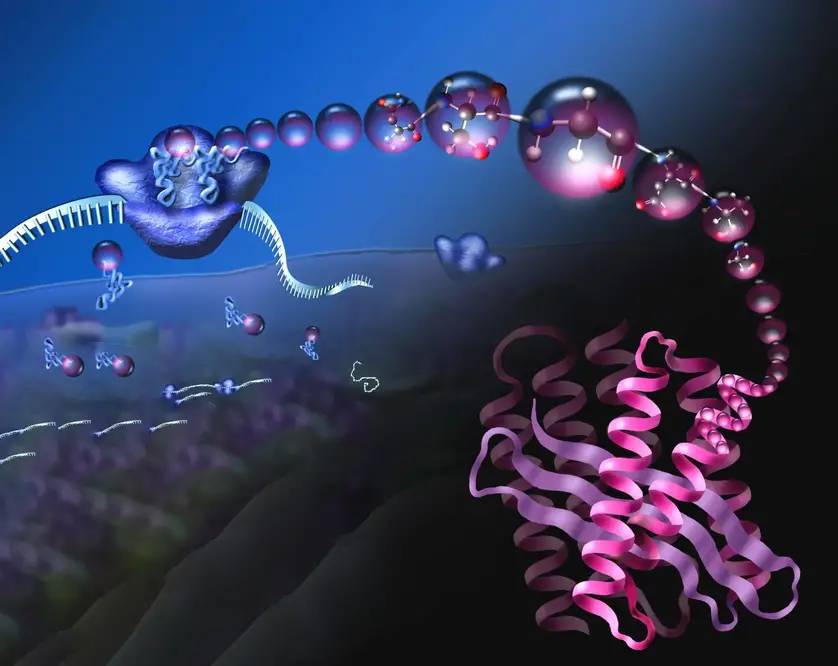
"Ribosomes (blue, upper left) are nanomachines that read mRNA (coming in from left) to assemble a chain of amino acids (magenta balls) that folds into a compact 3D protein (lower right, pink). Credit: Adapted from NSF image." (ScitechDaily.com/Hijacking Cellular Factories: Retooling the Ribosomal Translation Machine to Biosynthesize Molecules)


Researchers created the first synthetic human embryo in a laboratory. 


The synthetic human is one of the most fascinating things in science fiction. In some models, synthetic humans can make interstellar trips, and they can act as special forces operators. And of course, synthetic human embryos can use in medical tests. There is always the possibility that some worker in those laboratories wants a baby very hard. And in that case, that kind of person can steal one of those embryos. In that case that synthetic humans must treat as others. Synthetic human embryos are always causing discussions. 

Hybridization of humans and other species is possible. There are tests where the human embryo is hybridized with mice, and that thing hoped to create cloned organs for medical tests. But by using that technology is possible to create perfect organ transplants for people simply by cloning their organs. And that thing is one of the most interesting things in the world. In some visions, the genome that makes bowhead whales immune to cancer can connect with human genomes. And also things that make Greenland shark very long living can connect with human genomes.

Genome therapy is one of the newest therapies. In that therapy, the genome transplants would fix genetic disorders. But there is the possibility that gene therapy can use to create new immune cells like modified B- lymphocytes that can create medicines that destroy cancer cells. Genetically engineered immune cells can also change the DNA in the cell's nucleus. 

There is the possibility that the cells will get a genome transplant where they form new stem cells in the human body. In that model, every person's stem cell DNA will be stored after their birth. If researchers can make that thing and those genomes can store in liquid nitrogen they guarantee that every person can get stem cells from the cloned cells that grow in cell cultures. 

Hijacking cellular factories in the human body can program the cells to produce something that person is missing. Those cells can produce things like cytostatics. The genetically engineered immune cells that can create fibrine or spider web can use to fix the damage in blood veins. Those cells can also make it possible to close blood veins that transport nutrients for the tumors. Or they can close damaged blood veins in the case of accidents. 

Those genetically engineered cells can also create baby cells that are different from those cells. The genetically engineered macrophage can create bone cells as the next-generation cells. That will make it possible to fix damaged bones. There is the possibility that microchip-controlled genetically engineered macrophages can remove non-wanted cells from the human body. 


https://www.theguardian.com/science/2023/jun/14/synthetic-human-embryos-created-in-groundbreaking-advance


https://scitechdaily.com/how-to-guide-for-creating-mouse-human-chimeric-embryos/


https://scitechdaily.com/lab-grown-mini-lungs-accelerating-respiratory-disease-research/


https://scitechdaily.com/hijacking-cellular-factories-retooling-the-ribosomal-translation-machine-to-biosynthesize-molecules/

Thursday, June 15, 2023

The X-66A test plane uses new kinds of wings to make zero-emission or extremely low-emission aircraft possible.


The new wings are extremely thin. And that's why, in those wings is needed new types of supporting structures that wing. The new wing decreases the use of fuel by about 30%. Officially the X-66A is commercial aircraft, but the same technology can use in other large-size aircraft like cargo planes and maybe also strategic bombers like B-52 or B-1 updates can use these kinds of wings.

There is an interesting detail for that project. The X-66A is made by connecting those new wings to the removed MD-90 aircraft. And that thing tells that there is the possibility that those new wings are installed in the old bodies of aircraft like B-1 or some other aircraft. Those new wings can be installed in sweep-wing aircraft. And that allows making the new type of large-size aircraft with a longer operational radius. 


NASA’s ‘airliner of the future’ is now officially an X-plane(PopSci.com/ NASA’s ‘airliner of the future’ is now officially an X-plane)


B-1 "Lancer"

The new wing. Along with sweep-wing technology can be installed in B-1 bombers. 


That technology also can be integrated with other planes. The Lockheed-Martin X-59 QueSST ( Quiet SuperSonic Technology) is the test bed for researching the ability to create quiet or low-noise supersonic systems. The form of the aircraft aims the sonic cone at a smooth angle backward. That means the air travels a longer time to the ground. And that thing makes the pressure impulse weaker. 


Lockheed Martin X-59 QueSST (Quiet SuperSonic Technology) Low-Boom Flight Demonstrator. 

Variable wing geometry is the thing that makes those X-59-type systems more effective. If the wings can turn in the front position. That thing allows developers to make the aircraft able to use short runways. But at the same time that plane can be fast. The variable wing geometry is used in F-14, and F-111 aircraft. 

Those planes retired from service after the Gulf War. The only variable- or sweep-wing aircraft in the U.S. arsenal is B-1. And that new technology can make that aircraft more effective than ever before. Russians use that technology in Su-24 and MiG-23 planes as well as in Tu-140 bombers. 


https://www.popsci.com/technology/nasa-x-planes/

https://en.wikipedia.org/wiki/General_Dynamics_F-111_Aardvark


https://en.wikipedia.org/wiki/Grumman_F-14_Tomcat


https://en.wikipedia.org/wiki/Lockheed_Martin_X-59_QueSST


https://en.wikipedia.org/wiki/Rockwell_B-1_Lancer


Wednesday, June 14, 2023

MIT's new megawatt electric engine can help to electrify aviation.


The compact megawatt-class electric engines can use to raise aircraft into the air. And also in long-distance flights, those kinds of engines can use to rotate propellers or use blowers. That makes an aircraft electric use. Electric aircraft are more independent than regular aircraft because they can load their batteries from radio waves. And that thing gives them theoretically unlimited operational range. The megawatt-electric engines can use in large-size drones like Boeing Condor. 

The ability to transfer energy wirelessly to airborne systems allows the creation of quadcopters with unlimited operational range. That kind of system can be the ultimate recon and strike tool. Also, large-size quadcopters can use to raise aircraft from the ground. Then that system can fly them to the area there is no noise pollution problem. Or the aircraft can have a blower system that gives it low-noise VTOL (Vertical Take-Off and Landing) ability. 

When aircraft flies over a city area, it can use electric engines. And then outside the city area, it can start to use regular jet engines. Or into new plasma-jet engines. Plasma-jet engines allow using the nuclear reactors in aircraft. And that kind of system can make "Project Pluto 2" possible. In that system, the nuclear reactor gives electricity to plasma-jet engines., And that removes radioactive pollution from that system. 

The fact is that the aircraft also can use plasma-ion or plasma-jet engines. In those engines, the electric arcs or laser rays heat air in the engine to plasma, and the expansion of the air acts like combustion. The magnetic accelerators can pull that plasma backward. And that kinds of systems can make it possible to create miniature aircraft that can fly at least supersonic speed. There is the possibility that this kind of system can use in extremely small aerial vehicles. 


"MIT aeroengineers are creating a 1-megawatt electrical motor that is a stepping stone toward electrifying commercial airliners. Pictured are some industrial concepts for hybrid-electric aircraft. Credit: @Airbus SAS 2023" (ScitechDaily.com/MIT’s Compact Megawatt Electric Motor Could Help Electrify Aviation)


"The MIT megawatt motor (shown in cross-section at top right, and full scale at the bottom right) comprises key enabling technologies: a high-speed permanent magnet outer rotor, a low loss tooth-and-slot stator, an advanced heat exchanger, and integrated, high-performance power electronics. Credit: Courtesy of the researchers. (ScitechDaily.com/MIT’s Compact Megawatt Electric Motor Could Help Electrify Aviation)


Condor


Diagram of a pulsejet. In that model is not a back hatch. 

The plasma-ion engine allows creating the next-generation ramjet-propelled ammunition. If an artillery cartridge gets energy from outside and uses a plasma-jet engine that grenade could make an intercontinental journey. Plasma-pulsejet engine is the miniaturized version of the pulse engine, that was used in the V-1 flying bombs. The system can replace the combustion by using plasma. 

In a plasma-pulsejet engine, the system will pump air into the chamber. Then it will close the front hatch and start to expand the air in the chamber by using electric arcs or some kind of radiation. When that pressure is high enough, the system opens the back hatch. And the plasma that travels backward causes thrust. 

The plasma-jet or small-size plasma pulsejet or ramjet engines also can install in the rifle- or small-size cannon ammunition, and those things can theoretically make it possible to create a sniper rifle that can shoot targets from another continent. 


https://interestingengineering.com/innovation/new-electric-jet-engine-actually-works-inside-the-atmosphere

https://www.sciencealert.com/scientists-have-created-a-fossil-fuel-free-jet-engine-prototype

https://scitechdaily.com/mits-compact-megawatt-electric-motor-could-help-electrify-aviation/

https://en.wikipedia.org/wiki/Boeing_Condor

https://en.wikipedia.org/wiki/Project_Pluto

https://en.wikipedia.org/wiki/Pulsejet

https://en.wikipedia.org/wiki/Ramjet

https://en.wikipedia.org/wiki/V-1_flying_bomb

The new way to make large and clean 2D materials can bring new winds to civil and military systems.


A large graphene layer that covers aircraft or other vehicles can give ultimate strength to the layer. The problem with graphene and other 2D materials is that they need the 2D structure and single-atom layers for working perfectly. Researchers can put a graphene layer on the metal layer and separate it from the metal using nanotubes. 

And then another graphene layer will be installed on the first layer. The DNA molecules can act as nano springs between those layers. Those nano springs can take impact energy in their structure. And then that material can make it possible to create a new type of nano-armor. 

But there is the possibility that the nano-diamonds or some other nano-antennas can install in those graphene layers. The nanotubes can keep those antennas in position. If the system conducts electricity with opposite polarity into those antennas. That thing can make the electric arc and even destroy incoming asteroids or other ammunition. 

It is possible to use 2D material for increasing the engine's power during spaceflight. Ion engines shoot ions through the graphene web. And then the graphene is aimed at an electric impulse that rises the energy level of those ions. 


"Artistic depiction of KISS exfoliation and photoemission experiment. 2D material is separated from the parent crystal due to stronger interaction with the substrate. UV light is used to photo-emit electrons allowing studies of the electronic structure by direct imaging of the electronic bands, as seen in the background. Credit: Antonija Grubišić-Čabo and Dina Maniar, University of Groningen" (ScitechDaily.com/KISS: A New Way To Easily Produce Large, Clean 2D Materials)


In the most futuristic versions of the ion systems the graphene layer is full of antennas that look like nano-size pins. There are formed skyrmions around those antennas and then those spinning skyrmions drive ions in the wanted direction. 

The 2D microchips can make it possible to create a cannon that can shoot miniature satellites to the orbiter. The 2D microchips can resist more powerful recoil than 3D microchips. 

The 2D microchips are coming. The 2D microchips allow the creation of extremely lightweight systems. But another thing is that 2D microchips allow the creation of microcomputers that can resist extremely fast acceleration. So the 2D microchips allow creating the smart grenades which electronic components can resist extremely powerful recoil. 

And maybe the 2D microchips are making it possible to complete the human's dream about cannon that can shoot satellites into the orbiter. Normally people say that the satellite's components cannot resist the "orbiter cannons" recoil. But the 2D microchips resist more powerful recoil than normal microchips. 

There are more than one useful ideas where researchers can use 2D materials. The problem with those materials is that their product is very hard there is a possibility to cover the layer by using graphite, and then the laser removes extra atom layers from that layer forming graphene. 


https://scitechdaily.com/kiss-a-new-way-to-easily-produce-large-clean-2d-materials/

The system can create quantum-correlated photons from sunlight.

"Correlated photon pairs, generated via sunlight-pumped spontaneous parametric down-conversion in a nonlinear crystal, demonstrate ghos...